RPS6; OK/SW-cl.2; 40S ribosomal protein S6; Phosphoprotein NP33
宿主:
Rabbit
稀释比:
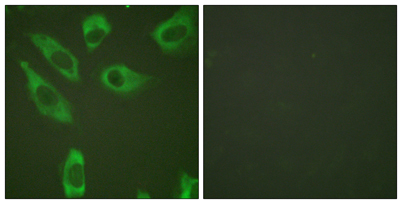
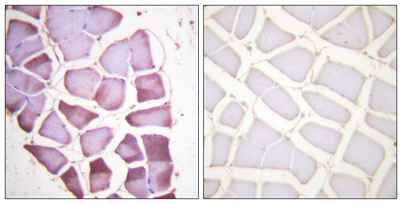
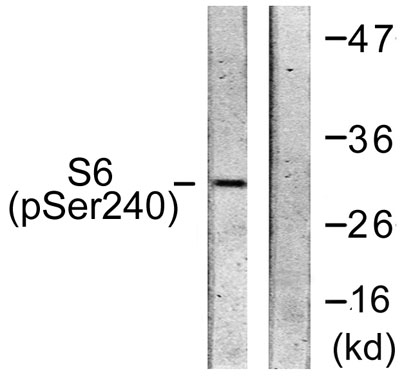
Western Blot: 1/500 - 1/2000. Immunohistochemistry: 1/100 - 1/300. Immunofluorescence: 1/200 - 1/1000. ELISA: 1/5000. Not yet tested in other applications.
免疫原:
The antiserum was produced against synthesized peptide derived from human S6 Ribosomal Protein around the phosphorylation site of Ser240. AA range:200-249
储存条件:
-20°C/1 year
克隆性:
Polyclonal
抗体亚型:
IgG
浓度:
1 mg/ml
实测条带:
28kD
基因ID:
6194
蛋白序列:
P62753
细胞定位:
nucleus,nucleoplasm,nucleolus,cytoplasm,cytosol,ribosome,polysome,small ribosomal subunit,membrane,cytosolic small ribosomal subunit,dendrite,intracellular ribonucleoprotein complex,cytoplasmic ribonucleoprotein granu
研究背景:
Ribosomes, the organelles that catalyze protein synthesis, consist of a small 40S subunit and a large 60S subunit. Together these subunits are composed of 4 RNA species and approximately 80 structurally distinct proteins. This gene encodes a cytoplasmic ribosomal protein that is a component of the 40S subunit. The protein belongs to the S6E family of ribosomal proteins. It is the major substrate of protein kinases in the ribosome, with subsets of five C-terminal serine residues phosphorylated by different protein kinases. Phosphorylation is induced by a wide range of stimuli, including growth factors, tumor-promoting agents, and mitogens. Dephosphorylation occurs at growth arrest. The protein may contribute to the control of cell growth and proliferation through the selective translation of particular classes of mRNA. As is typical for genes encoding ribosomal proteins, there are multiple processed