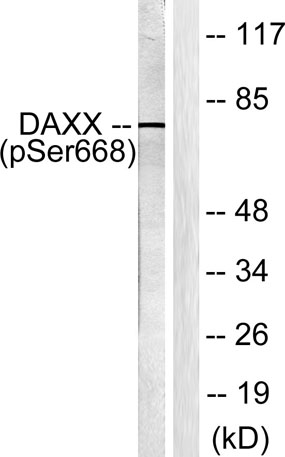
DAXX; BING2; DAP6; Death domain-associated protein 6; Daxx; hDaxx; ETS1-associated protein 1; EAP1; Fas death domain-associated protein
宿主:
Rabbit
稀释比:
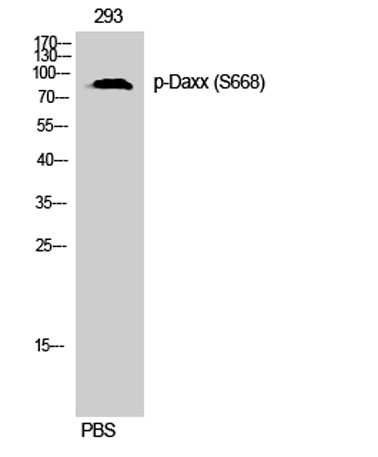
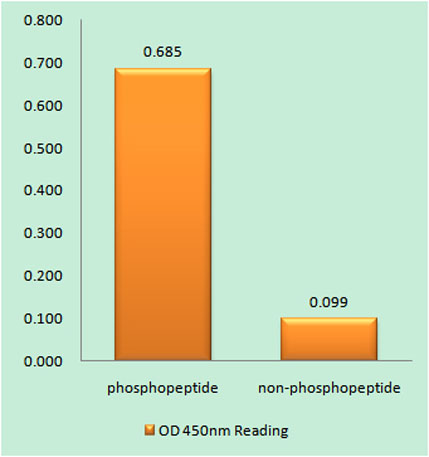
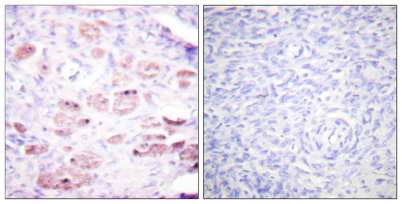
Western Blot: 1/500 - 1/2000. Immunohistochemistry: 1/100 - 1/300. ELISA: 1/10000. Not yet tested in other applications.
免疫原:
The antiserum was produced against synthesized peptide derived from human Daxx around the phosphorylation site of Ser668. AA range:634-683
储存条件:
-20°C/1 year
克隆性:
Polyclonal
抗体亚型:
IgG
浓度:
1 mg/ml
实测条带:
85-115kd
基因ID:
1616
蛋白序列:
Q9UER7
细胞定位:
Cytoplasm . Nucleus, nucleoplasm . Nucleus, PML body . Nucleus, nucleolus . Chromosome, centromere . Dispersed throughout the nucleoplasm, in PML/POD/ND10 nuclear bodies, and in nucleoli (Probable). Colocalizes with histone H3.3, ATRX, HIRA and ASF1A at PML-nuclear bodies (PubMed:12953102, PubMed:14990586, PubMed:23222847, PubMed:24200965). Colocalizes with a subset of interphase centromeres, but is absent from mitotic centromeres (PubMed:9645950). Detected in cytoplasmic punctate structures (PubMed:11842083). Translocates from the nucleus to the cytoplasm upon glucose deprivation or oxidative stress (PubMed:12968034). Colocalizes with RASSF1 in the nucleus (PubMed:18566590). Colocalizes with USP7 in nucleoplasma with accumulation in speckled structures (PubMed:16845383). .; [Isoform beta]
研究背景:
This gene encodes a multifunctional protein that resides in multiple locations in the nucleus and in the cytoplasm. It interacts with a wide variety of proteins, such as apoptosis antigen Fas, centromere protein C, and transcription factor erythroblastosis virus E26 oncogene homolog 1. In the nucleus, the encoded protein functions as a potent transcription repressor that binds to sumoylated transcription factors. Its repression can be relieved by the sequestration of this protein into promyelocytic leukemia nuclear bodies or nucleoli. This protein also associates with centromeres in G2 phase. In the cytoplasm, the encoded protein may function to regulate apoptosis. The subcellular localization and function of this protein are modulated by post-translational modifications, including sumoylation, phosphorylation and polyubiquitination. Alternative splicing results in multiple transcript varian