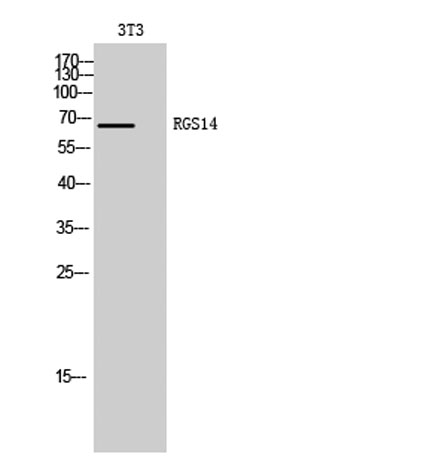
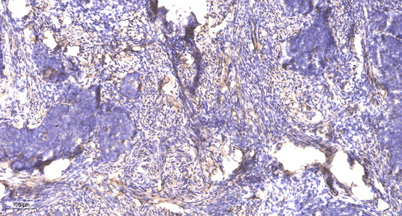
The antiserum was produced against synthesized peptide derived from human RGS14. AA range:125-174
Storage:
-20°C/1 year
Clonality:
Polyclonal
Isotype:
IgG
Concentration:
1 mg/ml
Observed Band:
65kD
GeneID:
10636
Human Swiss-Prot No:
O43566
Cellular localization:
Nucleus . Nucleus, PML body . Cytoplasm . Membrane . Cell membrane . Cytoplasm, cytoskeleton, microtubule organizing center, centrosome . Cytoplasm, cytoskeleton, spindle . Cytoplasm, cytoskeleton, spindle pole . Cell projection, dendrite . Cell projection, dendritic spine . Cell junction, synapse, postsynaptic density . Associates with the perinuclear sheaths of microtubules (MTs) surrounding the pronuclei, prior to segregating to the anastral mitotic apparatus and subsequently the barrel-shaped cytoplasmic bridge between the nascent nuclei of the emerging 2-cell embryo. Localizes to a perinuclear compartment near the microtubule-organizing center (MTOC). Expressed in the nucleus during interphase and segregates to the centrosomes and astral MTs during mitosis. Relocalizes to the nucleus
Background:
This gene encodes a member of the regulator of G-protein signaling family. This protein contains one RGS domain, two Raf-like Ras-binding domains (RBDs), and one GoLoco domain. The protein attenuates the signaling activity of G-proteins by binding, through its GoLoco domain, to specific types of activated, GTP-bound G alpha subunits. Acting as a GTPase activating protein (GAP), the protein increases the rate of conversion of the GTP to GDP. This hydrolysis allows the G alpha subunits to bind G beta/gamma subunit heterodimers, forming inactive G-protein heterotrimers, thereby terminating the signal. Alternate transcriptional splice variants of this gene have been observed but have not been thoroughly characterized. [provided by RefSeq, Jul 2008],