
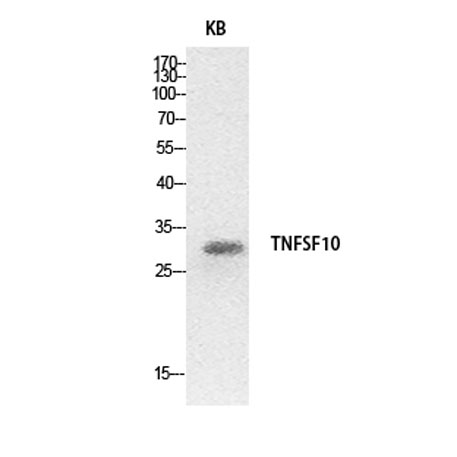
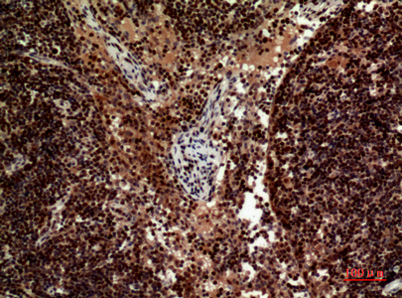
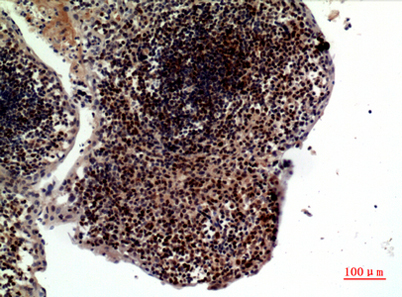
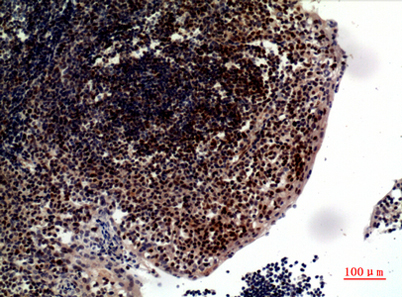
TNFSF10; APO2L; TRAIL; Tumor necrosis factor ligand superfamily member 10; Apo-2 ligand; Apo-2L; TNF-related apoptosis-inducing ligand; Protein TRAIL; CD253
宿主:
Rabbit
稀释比:
Western Blot: 1/500 - 1/2000. IHC-p: 1/100-1/300. ELISA: 1/20000. Not yet tested in other applications.
免疫原:
The antiserum was produced against synthesized peptide derived from the Internal region of human TNFSF10. AA range:31-80
储存条件:
-20°C/1 year
克隆性:
Polyclonal
抗体亚型:
IgG
浓度:
1 mg/ml
实测条带:
33kD
基因ID:
8743
蛋白序列:
P50591
细胞定位:
Cell membrane ; Single-pass type II membrane protein . Secreted . Exists both as membrane-bound and soluble form. .
研究背景:
The protein encoded by this gene is a cytokine that belongs to the tumor necrosis factor (TNF) ligand family. This protein preferentially induces apoptosis in transformed and tumor cells, but does not appear to kill normal cells although it is expressed at a significant level in most normal tissues. This protein binds to several members of TNF receptor superfamily including TNFRSF10A/TRAILR1, TNFRSF10B/TRAILR2, TNFRSF10C/TRAILR3, TNFRSF10D/TRAILR4, and possibly also to TNFRSF11B/OPG. The activity of this protein may be modulated by binding to the decoy receptors TNFRSF10C/TRAILR3, TNFRSF10D/TRAILR4, and TNFRSF11B/OPG that cannot induce apoptosis. The binding of this protein to its receptors has been shown to trigger the activation of MAPK8/JNK, caspase 8, and caspase 3. Alternatively spliced transcript variants encoding different isoforms have been found for this gene. [provi