
ENPP3; PDNP3; Ectonucleotide pyrophosphatase/phosphodiesterase family member 3; E-NPP 3; Phosphodiesterase I beta; PD-Ibeta; Phosphodiesterase I/nucleotide pyrophosphatase 3; CD203c
Source:
Rabbit
Dilutions:
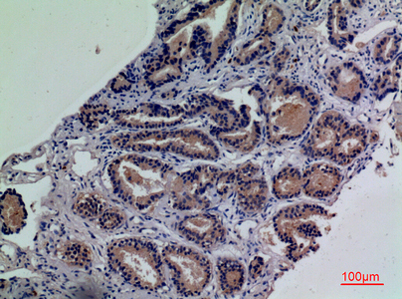
Western Blot: 1/500 - 1/2000. IHC-p: 1:100-300 ELISA: 1/20000. Not yet tested in other applications.
Immunogen:
The antiserum was produced against synthesized peptide derived from the Internal region of human ENPP3. AA range:281-330
Storage:
-20°C/1 year
Clonality:
Polyclonal
Isotype:
IgG
Concentration:
1 mg/ml
Observed Band:
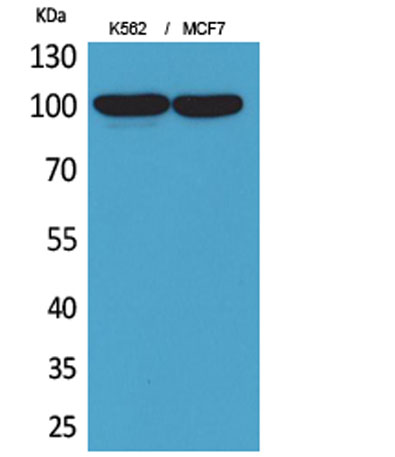
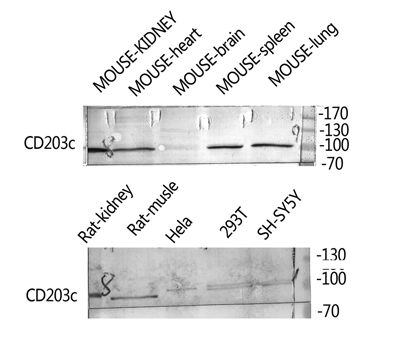
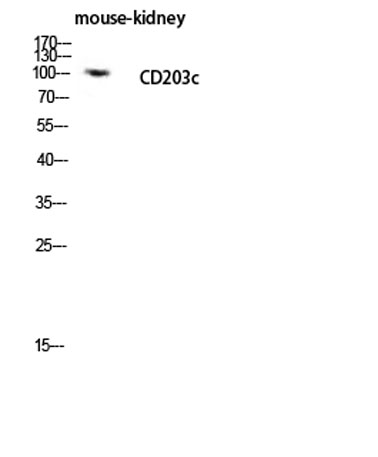
100kD
GeneID:
5169
Human Swiss-Prot No:
O14638
Cellular localization:
Cell membrane ; Single-pass type II membrane protein . Apical cell membrane ; Single-pass type II membrane protein . Secreted . Detected at the cell surface of basophils (PubMed:11342463). Detected at the apical plasma membrane of bile duct cells (PubMed:15072822). Located to the apical surface in intestinal and kidney epithelial cells. Secreted in serum, and in lumen of epithelial cells. .
Background:
The protein encoded by this gene belongs to a series of ectoenzymes that are involved in hydrolysis of extracellular nucleotides. These ectoenzymes possess ATPase and ATP pyrophosphatase activities and are type II transmembrane proteins. Expression of the related rat mRNA has been found in a subset of immature glial cells and in the alimentary tract. The corresponding rat protein has been detected in the pancreas, small intestine, colon, and liver. The human mRNA is expressed in glioma cells, prostate, and uterus. Expression of the human protein has been detected in uterus, basophils, and mast cells. Two transcript variants, one protein coding and the other non-protein coding, have been found for this gene. [provided by RefSeq, Oct 2015],