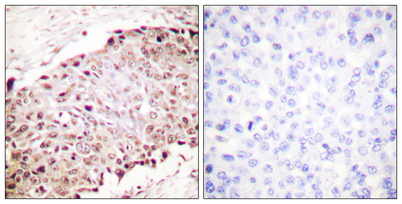
SUMO1; SMT3C; SMT3H3; UBL1; OK/SW-cl.43; Small ubiquitin-related modifier 1; SUMO-1; GAP-modifying protein 1; GMP1; SMT3 homolog 3; Sentrin; Ubiquitin-homology domain protein PIC1; Ubiquitin-like protein SMT3C; Smt3C; Ubiquitin-like protein
Source:
Rabbit
Dilutions:
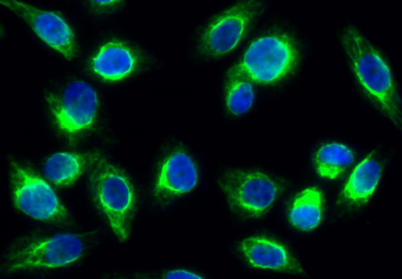
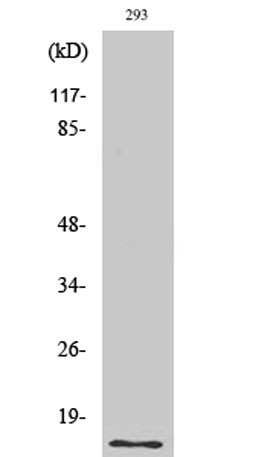
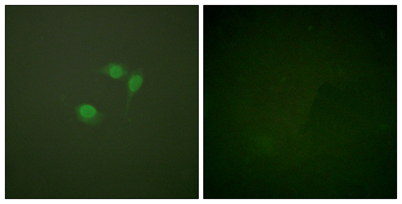
Western Blot: 1/500 - 1/2000. Immunohistochemistry: 1/100 - 1/300. Immunofluorescence: 1/200 - 1/1000. ELISA: 1/20000. Not yet tested in other applications.
Immunogen:
The antiserum was produced against synthesized peptide derived from human Sumo1. AA range:1-50
Storage:
-20°C/1 year
Clonality:
Polyclonal
Isotype:
IgG
Concentration:
1 mg/ml
Observed Band:
12kD
GeneID:
7341
Human Swiss-Prot No:
P63165
Cellular localization:
Nucleus membrane . Nucleus speckle . Cytoplasm . Nucleus, PML body . Cell membrane . Nucleus . Recruited by BCL11A into the nuclear body (By similarity). In the presence of ZFHX3, sequesterd to nuclear body (NB)-like dots in the nucleus some of which overlap or closely associate with PML body (PubMed:24651376). .
Background:
This gene encodes a protein that is a member of the SUMO (small ubiquitin-like modifier) protein family. It functions in a manner similar to ubiquitin in that it is bound to target proteins as part of a post-translational modification system. However, unlike ubiquitin which targets proteins for degradation, this protein is involved in a variety of cellular processes, such as nuclear transport, transcriptional regulation, apoptosis, and protein stability. It is not active until the last four amino acids of the carboxy-terminus have been cleaved off. Several pseudogenes have been reported for this gene. Alternate transcriptional splice variants encoding different isoforms have been characterized. [provided by RefSeq, Jul 2008],